Year: 2016

  • A special Christmas surprise

    A special Christmas surprise

    I’m writing this on the first day of winter as defined by the astronomical calendar. In my heart, though, winter started early morning, on the second of November. That day, we walked through the old town; snow on the ground, snow twirling down, snow on the roofs. We were completely alone and really, I couldn’t not believe the beauty before my eyes.

    Today, a little under two month later, days have stopped getting shorter and on Sunday, we’ll be sitting at the foot of our Christmas tree, opening the presents we wrapped a few days ago in brown paper and red ribbons.
    There is a gorgeous wicker basket too. One that came all the way from London, not unlike the best care package I’ve ever gotten.

    [heading_right]And mostly, there is something so wonderful and comforting about the thought of opening it on Christmas morning to the sound of wrapping paper and Christmas carols.[/heading_right]

    Yes, we were lucky enough to receive a beautiful hamper from Harrods. The one we chose was made in collaboration with Cartwright & Butler, which products I’ve always loved both for their inspired packaging and deliciously old-fashioned recipes.

    It was the first time I ever got a Christmas hamper. And really, after peeking through this one with my eyes full of stars, I intend on making it a new tradition in our home. Very much like a Christmas concentrate, this hamper feels like the only thing we need for the perfect Christmas day along with the people we love. There is coffee and tea, and even hot chocolate pearls. Biscuits and cakes, and more preserves than you can count on your fingers. And mostly, there is something so wonderful and comforting about the thought of opening it on Christmas morning to the sound of wrapping paper and Christmas carols.

    We’d make a pot of coffee and eat a slice of fruit cake for breakfast, with the innocence of two children who like to play make-believe. Perhaps we’d fall asleep, lulled by the soft sound of snow against our windows. And when we’d wake up, it would already be dark outside, and our vintage baubles would twinkle under the tree’s blinking lights.

    We’d open the fridge to a bottle of Champagne, a block of Västerbottensost [Västerbotten cheese], crème fraiche and löjrom [Kalix roe]. And before we’d know it, we’d have the most glorious dinner: cheese on tomato thins with a dollop of chilli chutney, marmalade on toast (because, really, is there anything better than breakfast for dinner?), cheese wafers topped with crème fraiche and roe, and of course, one too many chocolate oat crumble. And maybe even a caramel waffle or two.
    Yes, it all sounds like a dream, but unlike many others, this one will get true; in the way only shooting star wishes do. A dream I am resolved to have on repeat for the Christmases to come.

    You’ll find a detailed description of the hamper we chose here, although I do believe it is now out of stock. And more Harrods Christmas hampers here.

    I wish you all the warmest Christmas. Lots of love, Fanny.

    Disclaimer: This hamper was offered to me by Harrods for review; I was not compensated in any other way nor asked to write this post. I chose to tell you about it on my blog because I genuinely fell in love with it and would happily recommend it to friends.

  • Glad Lucia, a lussekatter history (and recipe)

    Glad Lucia, a lussekatter history (and recipe)

    Traditionally eaten for Santa Lucia on the thirteenth of December, lussekatter – also called lussebullar – have a nebulous history. One that’s laced with Christianity and paganism, German and viking heritage.

    In fact, even the origin of the Lucia celebrations is quite elusive.

    Lussi, an evil figure roamed the land along with her lussiferda, a horde of trolls and goblins.

    Lussinatta once coincided with the Winter solstice back in the 1300s when Europe still used the Julian calendar. During that night, the longest of the year, it was said that animals could talk and supernatural events could occur; Lussi, an evil figure (that holds many similarities with the german Perchta or the italian Befana) roamed the land along with her lussiferda, a horde of trolls and goblins, punishing naughty children and casting dark magic. People, forced to remain secluded, would eat and drink in an attempt to fight the darkness.

    And as the years went by in the pre-Christian Norden, farmers started to celebrate the return of the light and the tradition of a goddess of lights took roots in the pagan folklore.
    It was also the start of festivities of some kind – not to say Christmas, although it is believed that both Christian and heathen traditions started to blend from the 1100s . In fact the very origins of the word jul [Christmas] are blurry, with one occurrence dating back to Harald Hårfager who might have said: “Dricka jul!” [drink Christmas!].
    During these celebrations, pig would get slaughtered, both for the gods and for the feast.

    The tradition of a feast and offerings is documented in Erland Hofsten’s unpublished manuscript Beskrifning öfwer Wermeland, dating from the early 1700s. And although no further narrative is given, Hofsten believed in a pagan provenance.

    The first printed description comes a few decades later in 1773 through Erik Fernows’ Beskrifning öfwer Wärmeland: “Man skall den dagen wara uppe at äta bittida om ottan, hos somlige tör ock et litet rus slinka med på köpet. Sedan lägger man sig at sofwa, och därpå ätes ny frukost. Hos Bönderne kallas detta ‘äta Lussebete’, men hos de förnämare ‘fira Luciäottan’.” And now if you please excuse my poor translation/paraphrase (Swedish is hard enough without having to deal with old Swedish): On that day, we should be up early (otta is an old Swedish word akin to night, but really means the time of the day when the night becomes the morning, around 4-5am) to eat, and for some, a shot of snaps would go down. Then we’d lay on the sofa and would later eat another breakfast. Amongst the farmers this would be known as to “eat Lussi’s bait”, but for the more affluents it was called a “Lucia morning celebration”.

    One that spread from Värmland to Västergotland where C. Fr. Nyman encountered the custom for the first time, as described in his unpublished 1764 manuscript: “Rätt som jag låg i min bästa sömn, hördes en Vocalmusique utan för min dörr, hvaraf jag väcktes. Strax derpå inträdde först ett hvit-klädt fruntimmer med gördel om lifvet, liksom en vinge på hvardera axeln, stora itända ljus i hwar sin stora silfversljusstake, som sattes på bordet, och strax derpå kom en annan med ett litet dukadt bord, försedt med allehanda kräseliga, äteliga och våtvaror, som nedsattes mitt för sängarna… det är Lussebete .” That morning he was awaken by songs coming from outside his door. He then proceeded to meet a white-clad lady wearing wings and holding a large silver candlestick, which she placed on the table. And soon after another lady came in carrying a small table lined with cloth and full of food and drinks, which she laid in between the beds. In his story, C. Fr. Nyman, calls it Lussi’s bait, reinforcing not only the heathen terms of the celebration, but also hinting about the origin of the lussekatter.

    It is noted in Nordisk familjebok 1912 that it was common to bake a peculiar bread shaped as a L and called “dövelskatt” [the devil’s tax] in south-western Sweden: “I sydvästra Sverige bakas till L. ett särskildt kultbröd, kalladt ‘dövelskatt’”.
    And with different spellings like the Dutch duyvelskat, or the more common Lussebette, it’s hard not to think how the word we all thought meant Lucia’s cats was actually intended to be an offering to Lussi in exchange for her mercy. Or as it’s described in this interview of Anna Freij that the buns were tinted bright yellow with saffron to scare the devil away.

    With the introduction of the Gregorian calendar in the 16th century, Lucia no longer coincided with the winter solstice, but the customs of December 13th being the longest night of the year remained strong in the farming community throughout the centuries and up to the 1700s.
    And it’s suspected that as Christianity grew in the north, the church tried to associate the pagan tradition with Santa Lucia, mostly based on phonetics and etymology (latin lux: light).

    And just like that, the customs of eating saffron bread, something that was once reserved to the higher classes of southern Sweden, started to spread amongst rural Sweden, where wheat buns would be brushed with a saffron-infused syrup; with each province having their own distinctive shaped bun.

    I hope that what was intended to be “just a recipe” five or so hours ago, brought some insight into this wonderful tradition, which like many others is a complex maze of cultural and historical layers tangled into each-other like morning hair.

    Here are the sources I’ve used to this little research:
    http://runeberg.org/svetym/0512.html
    https://en.wikipedia.org/wiki/Harald_Fairhair
    http://www.firajul.nu/julenstraditioner/ordet-jul
    http://www.bageri.se/aktuellt/nyheter/varfor-ater-vi-saffransbrod-till-jul/
    http://malinryke.blogspot.se/2014/12/lussekattens-historia.html

    Lussekatter

    Come early November, every supermarket launches their annual production of lussekatter, which I suspect are loved by many.
    As soon as you step in, the sweet scent of saffron gives away the trolleyful of golden buns waiting to be wrapped in small plastic bags. I have never tasted one from the shop, but from what I'm told they tend to be on the dry side.
    My lussekatter, although certainly not authentic as their supermarket counterpart, are a dream to work with, to eat warm from the oven, or toasted the next day, to soak in an egg whisked with a dash of cream, milk, and sugar, and then pan-fried until golden, not unlike a French Swedish-toast.
    The recipe itself is a simple enriched dough that some would be tempted to call a pain au lait [milk bread]. As with any rich dough, I recommend using a stand-mixer, althought it's definitely possible to make them by hand, simply follow the instructions given on that post.

    Notes

    A note on the saffron:
    If you don’t have any ground saffron, simply bring the milk to the boil and soak/infuse the saffron threads in it for at least 30 minutes. You will have to wait for the milk to be completely cooled down before using in the recipe.
    Edit 13/12/2018: Nowadays, I always tend to dissolve the saffron in a tablespoon or so of rum. I find it brings out the flavour even more!
    Author: Fanny Zanotti
    Prep Time1 hour
    Cook Time12 minutes
    Makes 20 buns

    Ingredients

    For the raisins

    • a handful of raisins
    • boiling water

    For the dough

    • 250 g unsalted butter
    • 600 g strong flour
    • 75 g caster sugar
    • 18 g fresh yeast
    • 0.5 g one envelope ground saffron (read note above)
    • 7.5 g sea salt
    • 375 g whole milk

    Instructions

    • Soak the raisins in boiling water and set aside to cool down. This can be done up to three days ahead, in which case, keep the soaked raisins in the fridge.
    • Slice the butter into thin 2-3mm thick slices. Set aside until needed.
    • In the bowl of a stand-mixer fitted with the dough-hook, place the flour, sugar, yeast, saffron and salt. Add the milk and mix on medium speed for around 10 minutes or until the dough detaches from the sides of the bowl and feels smooth, elastic and barely tacky. If you take a small piece of dough, you should be able to stretch it into a very thin membrane.
    • Add the butter, one small piece at a time continuously until all the butter is in – and knead it in for a further 10 minutes.
    • Place the dough in a large bowl, and clingfilm to the touch. Refrigerate for at least 3 hours or up to 12.
    • Line three baking trays with paper and set aside.
    • Scrape the dough onto a lightly floured surface and divide in 50-55g pieces and cover loosely with clingfilm.
    • Take one piece and roll into a thin snake, approximately 30cm long, then form an S shape, curling both ends into a spiral. Place onto the prepared baking trays, making sure to give the buns plenty of space. And repeat with the remaining dough.
    • Cover with clingfilm and leave to proof until doubled in size, around 2-3 hours.
    • Preheat the oven to 200°C/fan 180°C.
    • Brush the top of the buns with the egg wash and press two raisins into each bun.
    • Bake for 10-12 minutes until golden-brown. Allow to cool down slightly.
  • Swedish pepparkakor

    Swedish pepparkakor

    This Swedish pepparkakor recipe isn’t one that comes with many traditions. It was in fact created on the very first weekend of advent earlier this month after days of formula research and calculations.

    We had just brought upstairs two cardboard boxes labelled hastily JUL 2015 [Christmas 2015] from our förråd [storage] and there were candles lighting our house to the most beautiful shade of gold; the sharp and intense smell of resin diffusing through every room, like a morning promenade through the forest.

    I had just unpacked a small pink plastic basket, filled to the rim with pepparkaksformar [cookie cutters] that I’d found last summer at a garage sale at one of the houses we’d cycle by every morning.
    After a quick run under warm soapy water, I left them to dry over my favourite torchon [kitchen cloth], the light grey one with nid d’abeilles [honeycomb] fabric.

    Later that night, we used them to cut through the dough we’d made the night before. And as I pressed each and everyone of them through the softly spiced pepparkaksdeg, I couldn’t help but think about the many Christmases these cutters had known. And just like that, a tradition-less recipe actually perpetuated one that I suspect lasted many decades and created a new tradition for us to hold over the coming years.

    Here is to the next first of advent!

    Pepparkakor

    I chose to make the lighter kind* of pepparkakor, one of many really. In some houses, the dough calls for whipping cream or baking powder. Muscovado sugar and treacle syrup. A pinch of cinnamon and a fat tablespoon of ground ginger.

    That day, I made the pepparkakor that I’d knew I’d love. Light and crisp with just enough bite to hold well when dipped in a cup of coffee – something I can only warmly recommend.

    I might try, next time I make a batch, to replace the caster sugar with light muscovado sugar or even brun farinsocker, a sugar that we have here in Sweden, and which is almost halfway between dark and light muscovado sugars; if you choose that road, you could most definitely substitute the caster sugar in the recipe below with 125 g dark muscovado and 100 g light muscovado.

    I will also perhaps replace the golden syrup for chestnut honey, as a reminiscence of my childhood pain d’épices (which I also need to tell you about).

    * Nowhere as light as they appear to be in the pictures I took here. Yes, I am still in dire need of figuring out this whole winter lighting thing.

    Pepparkakor

    Makes around 100 small biscuits.

    75 g water
    105 g golden syrup
    225 g caster sugar (read note above)
    175 g unsalted butter
    1 heaped tbsp ground cinnamon
    1 heaped tsp ground ginger
    3/4 tsp ground cardamom
    3/4 tsp ground cloves
    480 g plain flour
    1/2 tsp bicarbonate of soda
    1/4 tsp sea salt

    Bring the water, syrup, and sugar to the boil in a small pan. Off the heat, add the butter and spices, and allow to cool down to around 30-35°C.

    In a bowl, mix the flour, bicarbonate and salt.

    When the syrup has cooled down enough, slowly pour over the flour, and mix with a silicone spatula until a loose dough comes together.

    Place the dough onto a large piece of clingfilm, and flatten it into a square using the palm of your hand. Cover tightly with clingfilm, and refrigerate for at least 12 hours or up to a month.

    When you’re ready to bake your pepparkakor, take out your dough from the fridge and leave it at room temperature for 20-30 minutes.

    Preheat the oven to 200°C/fan 180°C.

    On a slighty floured surface, roll the dough to 3-4mm thick and cut out into the desired shapes. If you wish to hang your pepparkakor, make sure to cut a small hole before baking them.

    Arrange them onto baking trays lined with baking paper, and do not to mix the larger biscuits with the small ones as they won’t bake evenly.

    Bake for 5 to 8 minutes, depending on the size of the pepparkakor, or until the edges start to turn golden brown.
    When cooled down, decorate with royal icing if you wish, and store in an airtight container for up to a month.


    More Christmas adventures in the north of Sweden on Instagram: #fannysjul <3

  • PS. Time to start baking with saffron

    PS. Time to start baking with saffron

    “Saffran, pepparkakor, lingon och mandel.”

    If you sat on the windowsill, here with me – yes, right now – you’d see many things around us. The stars and advent candles, fluttering in every house. The snow, covering roofs till the horizon and further.

    In my kitchen – and I suspect many others – saffran, pepparkakor, lingon och mandel [saffron, gingerbread, lingon berries and almonds] pervade the air in the way only they can. And we’d watch bullar rise under the yellow glow of the oven lamp, spitting butter and oozing with marzipan just so.

    Yes, it’s time to start baking with saffron, although I might have possibly started a couple of weeks ago.
    And if you’d ever ask me, I’d possibly urge you to start too; most likely with my absolute favourite buns: saffransbullar med mandelmassa.

    My saffron recipes

    Saffranskladdkaka

    [Swedish saffron blondies] Snipp, snapp, snut – så var julen slut. Christmas has come and gone, and I never got …

    Birgittas saffranskaka

    [Birgitta´s saffron cake] If you follow me on instagram, you’ll recognise this cake. One that I make year after year, …

    Saffransmazariner

    [Saffron mazariner] Twelve weeks ago, almost to the second, Sienna was put on my chest; pink as a candy, eyes …

    Glad Lucia, a lussekatter history (and recipe)

    Traditionally eaten for Santa Lucia on the thirteenth of December, lussekatter – also called lussebullar – have a nebulous history …

    PS. Time to start baking with saffron

    “Saffran, pepparkakor, lingon och mandel.” If you sat on the windowsill, here with me – yes, right now – you’d …

    Saffransbullar med mandelmassa

    [Swedish saffron and almond buns] Sunrise: 9:33 AM Sunset: 1:28 PM Temperature: -11.8°C The Swedish saffron and almond buns you …
  • Glöggmys

    Glöggmys

    We have stars glowing by our windows. And snow when we look over the roofs of Skellefteå.

    We have a batch of saffron, almond and orange biscotti in the oven. And one of pepparkaksdeg [gingerbread biscuit dough] in the making: there is cinnamon, ginger, cardamom and cloves infusing in water, along with butter too of course! And soon the dough will come together.

    We have two cups of glögg on the table. With almonds and raisins just so.
    Yes, a little earlier today, I unwrapped each of the wonderful little cups that I had excessively wrapped in newspaper a few months ago after we had found them at a loppis [garage sale] in Dalarna over the summer.
    I remember that day; still early in the morning, we stumbled across the largest collection of Duralex tableware outside of my grand-mère’s house. It was at the small green house that stands on Orsa’s centre square, where we’d ventured on the promise of a gammaldagsmarknad [olden day market]. Of the excursion, these cups and many others are the only things that followed us; like a reminder of a past I find myself recollecting more and more often. And just like the ones I grew up with, I now hope to grow older with them too.

  • Kladdkaka du dimanche

    Kladdkaka du dimanche

    [Swedish chocolate cake, of the Sunday kind]

    Everytime I come around here, a whole season has gone by.

    There was summer and its endless hours in the kitchen that I now call home. But before we knew it, the time for semester [holidays] came. And went.

    Two weeks in our stuga [cabin] in the middle of the woods; and I still stand by my words when I say Åsen is my dream place. A dream that – this time – we shared with my family who traveled the three-thousand kilometres between us.

    We picked blåbär [blueberries] and lingon; and my father – who’d never been this up north ever before – spent a day teaching me where to find mushrooms in the Swedish forests, reminiscing the mornings we’d busied up in the lower Alps more than twenty years ago now. We picked mostly giroles, but also ceps and chanterelles, although it was still a little early in the season for the latter.

    We visited the small factory where the dalahäst we cherish so much are made, a short twenty minute drive from the stuga, in the heart of Dalarna. My mother bought more horses that she could – literally – handle; and the picture I took on my phone will always be a favourite memory of mine.

    We baked traditional Swedish snittar and drömmar [biscuits] that now also have a strong following in a little house of the south of France.

    Then came the golden days – that I must admit, I almost wrote as “goldays”, perhaps I am onto something – of autumn.

    Long walks by the river to the sound of the wind through birch branches so tall it makes you dizzy. And no matter what, I will always be in love with the peculiar colour of a sun setting through these trees that are now a part of my universe.

    There is the smell of rain. And dead leaves too. And of pumpkin roasting in the oven, just so. There is the first frost, which I had predicted to the day. Yes, to the day! And the rönnbär [Rowan berries] we picked and candied; a jar that will probably be forgotten at the back of the fridge for another few weeks before it makes an appearance on our table.

    And rather unexpectedly, there was winter too.

    The day after we’d moved to our new flat. The view of Skellefteå rooftops from our bed; one minute black as coal, the next covered in a thick mantle of snow. A snow that lasted for a week, even though back then, we did not know that just yet.
    The following Sunday, we pulled the suspenders of our warm overalls up and wrapped ourselves in wool. A morning in the snow, and an afternoon by the kitchen stove. And somewhere in the middle, kladdkaka and wine were involved.

    My Swedish kladdkaka recipe
    This is not a recipe I had planned to share with you, although it’s one that followed us through the seasons.

    Served with barely whipped cream and freshly picked berries in the summer; roasted pears and vanilla ice-cream in the autumn, and now made in a cardboard box kitchen as we were unpacking the things we love enough to have taken along on the ride that took us here to the north of Sweden.

    Yes, this kladdkaka recipe is just that. An everyday wonder; whipped up in less then ten minutes, it can be as fancy or as casual as you want it to be.

    And today, I thought I’d test the halogen builders site light Kalle bought last year for me to be able to take pictures through our long winter. And that perhaps, you’d appreciate to have your Sunday fika sorted out for the weekend ahead.

    In case you still have your doubts, you should know Sam’s – 3 year-old – stance on the subject: “De är jättekladdiga!” [They are very sticky*].
    * A good thing since kladdkaka literally means “sticky cake”, although I have a feeling chewy would be more of an appropriate translation.

    My Swedish kladdkaka recipe

    Makes one 22cm cake, serving 8-10.

    125 g unsalted butter
    250 g caster sugar
    1 tbsp vanilla sugar
    2 eggs
    90 g plain flour
    40 g cocoa powder
    5 g sea salt

    Preheat the oven to 175°C. Butter and line a 22cm tin with baking paper.

    Melt the butter in a pan set over medium heat.

    Off the heat, add the sugars and allow the mixture to cool down slightly for 2-3 minutes. Whisk in the eggs, one at a time, mixing well after each addition.

    Add the flour, cocoa powder, and salt, and mix until just smooth.

    Pour the batter in the prepared tin, and bake for 25 minutes, or until domed and cracked on top. Allow to cool down completely before serving.

  • An autumn day

    An autumn day

    We went for a walk today. And for once, I remembered to take my camera along. Our official purpose was to pick rönnbär [rowan berries], but really, I just wanted to wrap myself in a golden hour that comes everyday a bit sooner.

    We walked by the river. And crossed the dam that seems more of a waterfall at the moment, as water gets released before the snow comes.

    Every step we took over the bridge left traces in the frost. The first that lasts until the afternoon; only in the shadow of course, but still enough to warm my heart for a winter that I’ve longed after for weeks now.
    Yes, winter, you may come now.

    When we came home, coffee was promptly made and we picked through our small harvest. I have rönnbärsgele [rowan berry jelly] and syltade rönnbär [confit rowan berries] in mind, so hopefully I’ll share these with you soon.

  • Almond and raisin tea cake

    Almond and raisin tea cake

    I’ve been thinking about this cake ever since my mum emailed me earlier this week, asking for a good recipe for cake aux fruits confits.

    Growing up, cake aux fruits confits was always the last one left on a birthday dessert table. Slices of dry cake, studded with always too little candied cherries, of the bright-red kind, which if you’d asked me twenty years ago were the best part about this loaf cake.

    Of course, my dad who’s always been fond of the store-bought kind (same goes for madeleines, go figure!), would heavily disagree. But to be completely honest, as I read my mum’s email, I couldn’t stop myself from thinking that good and cake aux fruits confits don’t really go hand in hand. A thought that I’d soon learn how to let go.

    As any new recipe I work on, I make a mental list of the things I want and do not want in the finished product.
    Here I was trying to go as far away as possible from the fruit cakes I used to make when I first moved to London. Rich with dark brown sugar, many raisins and manier currants, and loaded with so much candied fruits you’d wonder where the cake batter had gone.

    What I wanted was a moist sponge with a slightly dense crumb and deeper flavours, studded with plump raisins and delicate candied fruits. A light-golden crust, made soft with ground almonds on the batter and a generous wash of tea-infused sugar syrup on the warm loaf.

    I made the cake this morning, as water was boiling for the first of many French-press-fuls of coffee. And I liked it so much that I thought you might too. Et pour toi aussi Maman <3

    I had to leave out the candied fruits, because I didn’t have any at home, and really, I’m pretty certain that the Swedes are wise enough to leave them out from their supermarkets’ shelves; yes, I truly think I haven’t spotted any since we moved here, not that I’ve been restlessly looking for fruits confits.
    It made for a wonderful almond and raisin tea cake, but if you’re after a cake aux fruits confits, you could most definitely replace some of the raisins with candied fruits, as noted in the recipe below.

    Almond and raisin tea cake

    Makes one loaf

    boiling water
    100 g raisins
    1 Breakfast tea bag

    125 g butter, soft
    70 g light brown sugar
    50 g caster sugar
    1 tsp vanilla sugar
    3 eggs
    100 g plain flour
    80 g ground almonds
    1 tsp baking powder
    120 g raisins or candied fruits
    (see note above)

    A hour before staring, soak the raisins in boiling water – enough to cover them completely. Add the tea bag and set aside until needed.

    Preheat the oven to 180°C (for a fan-assisted oven). Butter and line a loaf tin with baking paper.

    Drain the raisins, pressing well to get rid of any excess liquid, and making sure to save the soaking liquid, which we’ll later use to make a syrup to brush the warm loaf with.

    Cream the butter and sugars for 5-6 minutes, until light and fluffy. Add the eggs, one at a time, beating well after each addition.
    In another bowl, mix the flour, ground almonds, baking powder and raisins (or candied fruits, if using).
    Pour over the butter mixture and fold gently using a wooden spoon or spatula, until smooth. Finally fold in the soaked raisins and pour the batter into the prepared tin.

    Bake for 10 minutes at 180°C, then reduce the temperature to 160°C and bake for a further 30-35 minutes, or until the sponge feels springy to the touch.
    In the meantime, weigh out 100 g of the soaking syrup into a small pan and add 70 g of caster sugar. Bring to the boil. When the cake is baked, immediately brush the syrup on top of the warm loaf.
    Allow to cool down completely and unmould.

    This cake will keep for days at room temperature,well-wrapped in clingfilm.

    Cake aux raisins ou Cake aux fruits confits

    Pour un cake

    100 g raisins secs
    eau bouillante
    1 sachet de thé anglais

    125 g beurre, mou
    3 oeufs
    70 g vergeoise blonde
    50 g sucre
    1 càc sucre vanillé
    100 g farine T55
    80 g amandes en poudre
    1 càc levure chimique
    120 g raisins secs ou fruits confits

    Un heure avant de commencer, placer les raisins secs dans un bol supportant la chaleur et verser de l’eau bouillante pour les recouvrir. Ajouter le sachet de thé et laisser infuser pendant 1 heure.

    Préchauffer le four à 180°C (pour un four ventilé). Beurrer un moule à cake et le recouvrir de papier cuisson.

    Egoutter les raisins en prenant soin de bien les presser afin d’extraire un maximum d’eau. Réserver l’eau de trempage qui servira par la suite à imbiber le cake.

    Battre le beurre avec les sucres pendant 5-6 minutes. Ajouter les oeufs, un à un, en battant environ une minute après chaque oeuf.

    Dans un bol, mélanger la farine, poudre d’amandes, levure chimique et fruits confits (ou la seconde pesée de raisins secs pour un cake aux raisins). Verser sur le beurre et incorporer la farine à l’appareil en utilisant une cuillère ou spatule jusqu’à obtention d’une pâte bien lisse.
    Finalement, ajouter les raisins secs préalablement égouttés et mélanger brièvement.
    Verser l’appareil dans le moule à cake beurré.

    Cuire 10 minutes, puis abaisser la température à 160°C et poursuivre la cuisson pendant environ 30-35 minutes.
    Pendant ce temps, verser 100 g du liquide de trempage des raisins dans une petite casserole et ajouter 70 g de sucre. Porter à ébullition et réserver.

    Une fois cuit, imbiber le cake encore chaud à l’aide d’un pinceau. Laisser refroidir complètement, puis démouler.
    Ce cake se conserve très bien à température ambiante, enveloppé dans du papier film.

  • Bonjour juin, rhubarb edition

    Bonjour juin, rhubarb edition

    Let me tell you the story of yesterday. Or rather, of yesterday afternoon.

    We stopped at the gas station. Two French hot-dogs and bad cups of coffee later we turned right on the old road towards Kusmark. It had only been a couple of weeks since our last trip and yet, the never-ending sun turned the fields into a thousand shades of green. There is the blue-green of the conifers, and the vibrant tarnished-gold of sunrays through the birch leaves.

    A wonderful forest made of apple trees and lilac, bursting and blooming, not unlike a kaleidoscope.

    And just like the road, Svante’s garden had become a wonderful forest made of apple trees and lilac, bursting and blooming, not unlike a kaleidoscope.

    I took my shoes off as I stepped out from the car and ran to the rhubarb plants, wondering how big they would have grown.
    And if it’s anything to go by I’d say that it must have been much warmer this year than last, as they reached a good twenty centimeter above my head.

    We picked and trimmed. And picked again.

    Two bushes gave us a little over twenty kilograms, perhaps even thirty. All while we left the last plant – the one by the mountain of chopped wood, drying for the winter – mostly untouched.

    This is the aftermath. A beautiful mess, of some sort. The bigger-than-I’d-ever-seen leaves went into the compost, and the stalks – at times green, at times red – were washed under ice-cold water, and stuffed into plastic bags.

    I might not be the most frequent blogger, but you can be sure to see me at least once a year as rhubarb season approaches.

    There is something about it that I can’t quite pinpoint. Most likely one of these cliché childhood memories of my grand-parents potager [vegetable patch] in Fouras.
    And just like a forever-carousel of happy recollections, neatly-arranged jars of confiture de rhubarbe [rhubarb jam] and silent wishes, here is my not-so-official June* rhubarb list.

    1. Dipping peeled rhubarb stalks in sugar, just like K. told me about a few years ago, on one of the many summer nights we spend on the south bank.
    2. Cooking rababersaft [rhubarb cordial], which everyone here freezes in small water bottles to bring a bit of summer throughout the winter days.
    3. Maybe, making a batch of rabarberbullar [rhubarb buns].
    4. And an upside-down rhubarb cake.
    5. I’ve been looking forward to trying Tartine bakery’s galette dough; and really, I think a rhubarb galette needs to happen.
    6. Baking my favourite cake: a soft vanilla sponge with bits of chopped rhubarb and a swirl of rhubarb jam, little pockets of cheesecake and a heavy handful of streusel sprinkled over its top.
    7. Of course, rhubarb jam. Not a year should go without.
    8. I’ve been dreaming of creating a simple ice-cream recipe – with no special sugars (hejdå dextrose and atomised glucose) and no stabilisers (with perhaps, cornflour or gelatin as a thickener). And given the state of my fridge-turned-rhubarb-storage, I might have to start with rhubarb creamsicle ice-cream. TBC.
    9. Thick sliced of brioches, French-toasted just so, with a generous spoonful of rhubarb compote.
    10. What’s your favourite rhubarb recipe? How do you deal with your bountiful plants?

    * June because living in the north of Sweden means just that: rhubarb in June. Enough said 🙂

  • Raw carrot cake energy balls

    Raw carrot cake energy balls

    The days are now long again. With the sun setting at ten thirty pm and rising just a short hours later at two thirty am.

    And when I told Svante last Sunday “Det känns som sommar idag.”, he was quick to answer “Det är sommar.”, something that went in unison with his rhubarb plants, which have dramatically grown over the span of a few weeks.

    So I guess summer has started; on a Sunday afternoon.

    With the ice gone from the rivers of north Sweden for what feels a couple of days, K. turned into an almost full-time fly-fisherman. And as the last traces of snow disappeared (although I’ve now seen a little patch, by Bonnstan, which is still covered in a mountain of dirty snow), we packed our car, just so we’d have the essentials ready. All day. Everyday.

    A blanket on the back-seat, in case we drop by Kusmark to pick up K.’s brother’s dog Kaiser. Waders, wading boots (for him) and hiking boots (for me), neatly arranged in a banana cardboard box in the trunk. A couple of rods and reels. Many fly boxes and manier flies.

    Some days, I happily join him, along with our kaffepanna [Swedish coffee pot], two white plastic mugs, and our favourite kokkaffe; a chunky piece of falukorv [Falun sausage], and perhaps a baguette or a few slices of sourdough bread; a knife; a box of matches; and a few energy balls in a little plastic bag.

    Raw vegan carrot cake balls
    I love to make a large batch of these and keep them in the freezer for days when we go on a little fishing/hiking trip. And really, they have now replaced the chocolate wrapped in foil that we used to bring along, at times with bits of roasted hazelnuts, other times with salty nuggets of lakrits [liquorish].

    The last batch I made was this one: carrot cake-ish, of some kind. But the variations are endless.

    You could substitute the carrot for raspberries (a favourite of mine) or bananas. Add a fat tablespoon of raw cocoa powder. Replace the oats for sprouted buckwheat or rye. Add seeds from a vanilla pod, or a grated tonka bean, or a few chopped nuts. And when the stone fruits will be in season, I urge you to try to make these with fresh peach and dried apricots (to replace the dates); and maybe add a pinch of saffron and a small handful of pistachio nuts. Another wonderful option is to use half passion fruit pulp, half grated apples, and roll the balls in matcha powder.

    Raw vegan carrot cake balls

    Makes 8-12 energy balls

    120 g rolled oats
    50 g shredded coconut
    1 tsp ground cinnamon
    1/4 tsp ground ginger
    1/4 tsp ground cardamom
    pinch of salt
    130 g grated carrots (approx. 1)
    90 g pitted medjool dates (approx. 6)
    2 tbsp coconut oil (approx. 30 g)
    1 tbsp agave/maple syrup

    Place the dry ingredients in a food processor and blitz for a minute until coarsely ground. Add the carrots, dates, coconut oil and syrup, and blitz until it forms a dough.
    Transfer to a clean work surface and roll into a log. Cut into 8, 10 or 12 depending on the size you wish your energy bites to be.
    Roll each segment into a ball and coat in shredded coconut.
    Place in an airtight container and refrigerate for at least 1 hour before eating. The raw vegan carrot cake balls will keep in the fridge for around 4-5 days. You could also make a double batch and freeze them for up to 3 months.

  • Carrés au citron

    Carrés au citron

    [Lemon squares]

    You can ask any chef; staff meals are a luxury in the restaurant industry. Over the past ten years, I’ve come across almost anything.

    The baguettes we’d be sent to buy at the wonderful Des gâteaux et du pain, sliced in half lengthways, and placed on the bench along with a container of Bordier butter, one of home-made strawberry jam, and one filled with fleur de sel. The barely-warm café au lait, drunk standing by the oven. The amazing canteen that had a soft-serve ice-cream machine, a salad bar and one for toasties too, oh and an espresso machine too! The delivery driver slash tarte tatin chef who’d make a pit-stop at the corner boulangerie during his rounds, and bring back warm pains aux raisins to the labo. The leftover chips from an order, eaten with saffron aioli at the end of a dinner service as the kitchen was getting scrubbed. The best poached eggs a breakfast chef placed in your fridge with a little note. The grenadine mister freeze I mass-produced in the summer months. And the watermelons we sliced and left around the kitchen in nine-pans, to be eaten whenever a rare quiet minute appeared.

    One of my favourites were the “family” dinners we had every day at four pm when we opened John Salt with Ben Spalding.
    I still remember vividly that my turn was on wednesdays. Vividly, because it was perhaps the worst day for it to happen: the usual putting-away of the morning veg and dairy deliveries, the weekly dry-store delivery, the morning deep-cleaning, the 10am kitchen meeting. This meant very little time to prep for service, let alone cook dinner for all of us.

    If you’d ask me what I thought about staff meal at around three-thirty pm on a wednesday, you might have heard some French, and yet, four years on, it’s one of my fondest memories from my London years.

    Some weeks, I’d make a simple salade niçoise. Or a large pissaladière. Maybe some cheddar toasted sandwiches. And a few crisp leaves dressed in an quick lemon vinaigrette. And, always something sweet: at times cookies, taken out from the oven a few minutes before the table was set; at times, burnt-orange marmalade loaf cakes or lemon squares.

    And just like this, I thought I’d introduce a new feature: Feed the chefs. It’s something I’ve had in mind for a while; in fact, I have a draft from 2013 called Feed the chefs: Wholewheat flour and hazelnut cookies.
    In this feature, you’ll find simple recipes that can be made at home or for a crowd.
    For reference, a gastro is a 53×32.5cm metal tray, which is widely used in professional kitchens.

    Lemon squares

    This recipe has been in my notebooks – under one form or another – for years. What started out as a curd made with only eggs, lemon juice and zest, sugar, and butter has evolved under the years into what I consider my perfect lemon bar.
    I increased the butter dramatically. Added egg yolks to improve the texture. And reduced the amount of sugar, a little at a time. Sometimes, I like to add a dash of cream to the curd mixture as I find it takes the lemon squares to another level, on a par with my best lemon tart. However, if you’re out of cream, the lemon squares can also be made without!

    It has a crisp tanginess and is wonderfully creamy, yet it still slices beautifully and holds well.

    At times, I’ll make it with the most brittle shortbread, the one I talk about in Paris Pastry Club, but most days I’ll go for a flaky biscuit dough, with light brown sugar and demerara, which I think complements the lemon flavour in the best way possible.

    Notes:

    – You’ll notice that the “home” recipe below makes a larger quantity of dough than you’ll need; but unless you’re willing to break an egg, whisk it, and use 16g for a third of the recipe – not to mention leave out the amazing cinnamon crisp biscuits you could make with the leftover dough – then I’d suggest you make the large batch, use 275g of it for the lemon squares and roll the rest in between two sheets of baking paper to 4-5mm thick and then proceed as mentioned in this beautiful recipe from Trine Hahnemann.

    – The shortbread base does not need to be blind-baked with weights (or pulses). I like to prick it with a fork to avoid large bubbles and bake it as it is for a flakier result.

    – I always rub my zest into the sugar to extract as much essential oils as possible.

    – Whenever I’m making custard or curd tarts, I like to cook my curd over a bain-marie until it reaches 70-75°C. This has two purposes: first, it makes the final baking much more even and quick – you won’t find a custard tart with puffed up edges and a runny centre in my house. Secondly, it makes the bubbles disappear, leaving you with lemon squares that can be served without their traditional dust of icing sugar.

    Lemon squares


    Makes 25 small squares or 9 large ones


    Makes one gastro (around 60 squares)


    For the shortbread base
    100 g light brown sugar
    25 g demerara sugar
    zest from 3 lemons
    375 g plain flour
    1 tsp baking powder
    1 tsp ground cinnamon
    1/2 tsp sea salt
    250 g cold butter, cubed
    1 egg


    For the shortbread base
    100 g light brown sugar
    25 g demerara sugar
    zest from 3 lemons
    375 g plain flour
    1 tsp baking powder
    1 tsp ground cinnamon
    1/2 tsp sea salt
    250 g cold butter, cubed
    1 egg


    For the lemon curd
    240 g caster sugar
    zest from 2 lemons
    150 g egg yolks (around 7-8)
    110 g eggs (around 2 large)
    180 g lemon juice (from approx 3-4 lemons)
    120 g unsalted butter, cubed
    40 g double cream (optional, read note above)


    For the lemon curd
    650 g caster sugar
    zest from 6 lemons
    420 g egg yolks
    300 g eggs
    500 g lemon juice
    300 g unsalted butter, cubed
    120 g UHT cream (optional, read note above)


    Make the dough

    Butter your baking tin (or gastro) and line the bottom with baking paper, leaving 3cm on each side to use as handles to take out the tart from its tin after baking.

    Place the flour, sugars, baking powder, and salt in a large bowl, and mix to combine. Add the butter, and rub it in the flour mix until it resembles coarse oats. Add the egg and work the dough until just smooth.
    If you’re making the smaller lemon squares in a 25x25cm tin, use only 275g of shortbread dough and keep the rest to make cinnamon biscuits as mentioned in this recipe.

    Place the dough in your prepared tin and flatten using the palm of your hands. Prick with a fork and chill for at least 30 minutes or up to 4 days.

    Preheat the oven to 175°C.
    Bake the shortbread for 20-30 minutes or until golden brown.

    Once baked, set aside until needed and reduce the oven temperature to 120°C.
    In the meantime, make the lemon curd.

    Make the curd

    Place the sugar and zests in a large bowl, and rub in between your fingers to extract the oils from the lemon zest.
    Add the egg yolks, eggs, lemon juice and butter, and cook over a pan of simmering water until it just starts to thicken and the foamy bubbles disappear; it should be around 70-75°C.
    If using, add the cream now and stir to combine.

    Immediately, pass the curd onto the cooked shortbread base using a fine-mesh sieve. And bake for 15-20 minutes. The centre should still jiggle slightly.

    Allow to cool down to room temperature, then chill in the fridge for at least 2 hours before gently lifting it from the tin and cutting it into squares.
    To do this, fill your sink with hot water and dip your knife in it for a few seconds. Wipe the blade clean making sure the sharp edge isn’t facing your fingers, and slice the tart into 5x5cm squares (or 8x8cm if you’re a lemon lover), rinsing and wiping your knife in between each slice.

    Serve with a dust of icing sugar or some blow-torched Italian meringue for a faux-lemon meringue tart.

  • Kalkbruket

    Kalkbruket


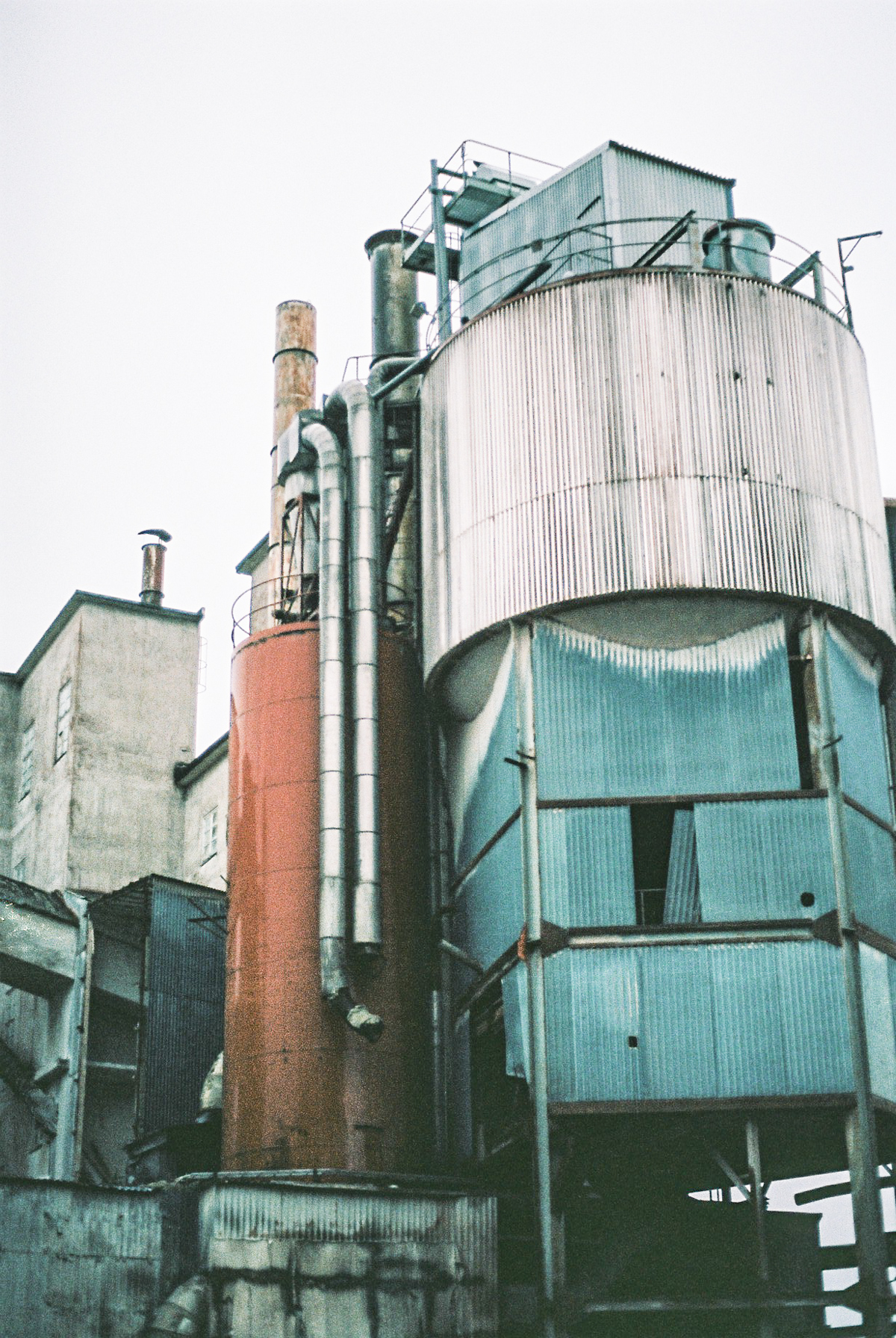
    We passed by this abandoned lime kiln on our way back from Åsen, and I had to stop the car. We parked by the small house across the road. We walked around the beautifully-decayed factory and right then, an almost-alternate reality opened in front of our eyes. It was breathtaking.

    Perhaps you don’t know, but I’m fascinated with industrial buildings, especially those that have been deserted. The metal pipes and sheets. The wind through broken windows and the electric silence. The rawness, almost bare.

    An art of some sort; a stillness that moves me and makes me reflect on what surrounds us.

    What inspired you today?